3D Printing vs Machining: How to Know Which is Right for Your Program
3D printing has become one of the most talked-about processes in manufacturing. It comes up in sourcing meetings, engineering reviews, and budget discussions as a way to cut production costs, largely because it can produce intricate parts that have never been achievable with traditional injection molding.
But 3D printing still has its limitations and can’t be treated as a total replacement for CNC (computer numerical control) machining. In this article, we’ll explore both manufacturing techniques, applications for both, and why you might choose one over the other.
What Is 3D Printing vs. Precision Machining?
The two processes solve manufacturing problems from opposite directions.
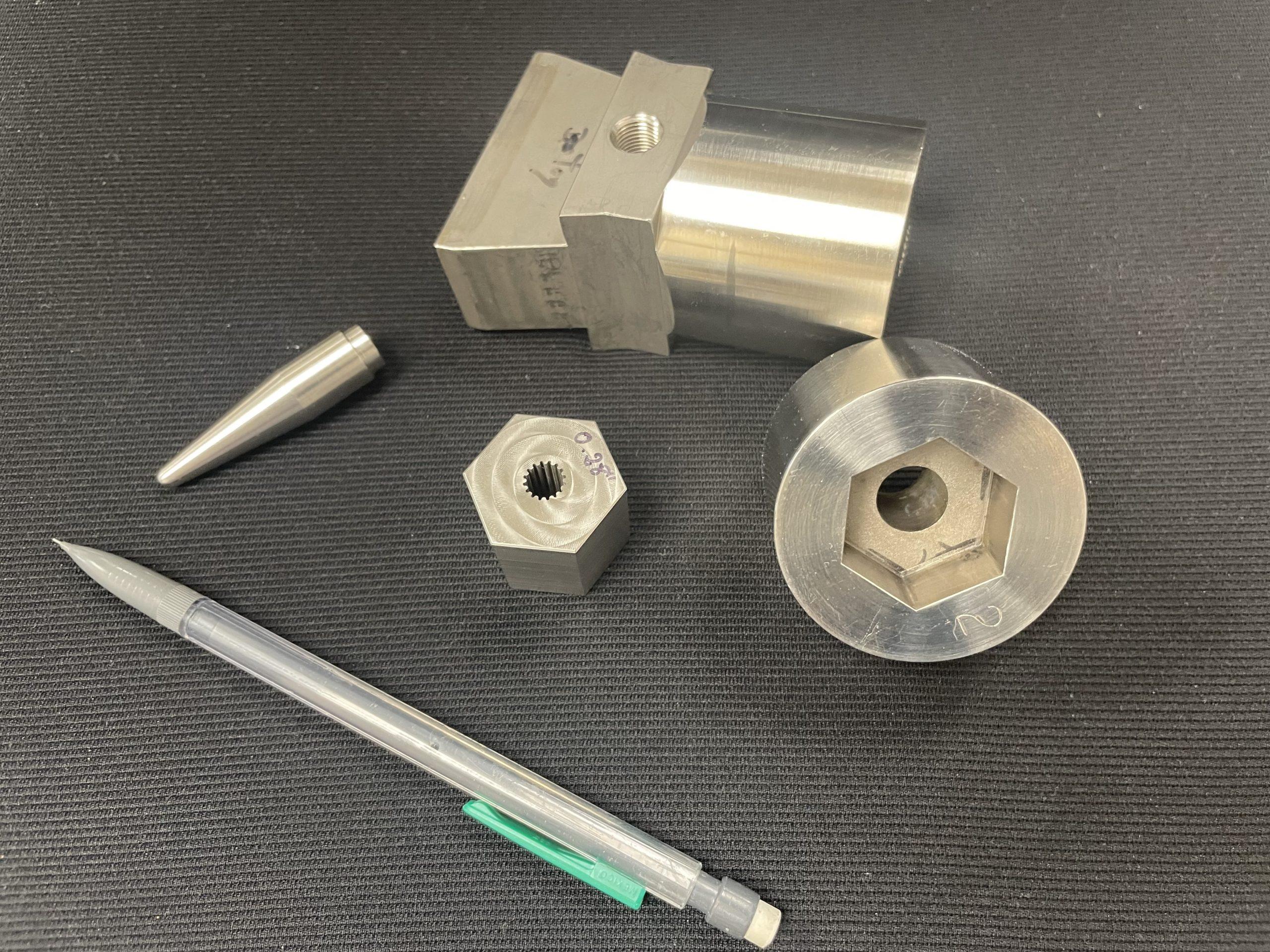
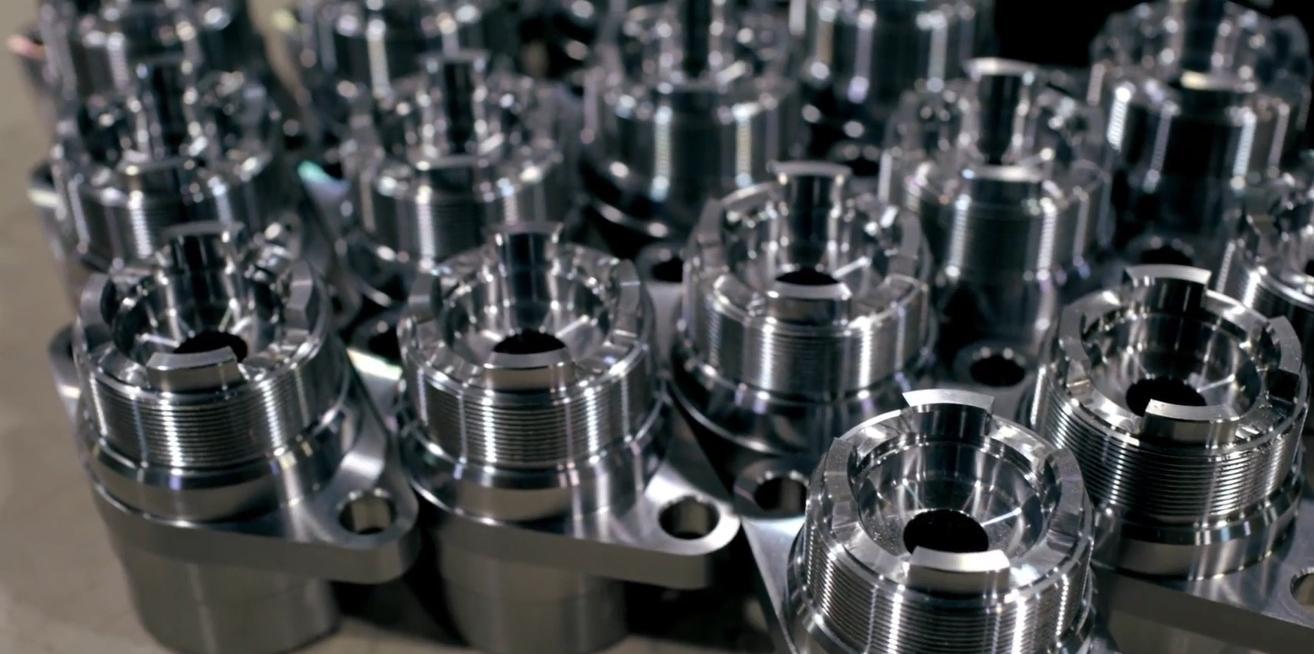
Precision machining, also called subtractive manufacturing, starts with a solid block of material, such as aluminum, titanium, brass, Inconel, or stainless steel, and removes material with cutting tools like lathes, mills, and grinders until the final geometry emerges. It’s the process of choice when a part needs tight tolerances and an exact, repeatable surface finish, because the material properties are already fully dense and the cutting process is controlled to fractions of a thousandth of an inch.
3D printing, also called additive manufacturing, builds a part up layer by layer from a digital file. It’s a strong fit for rapid prototyping and for production runs of plastic parts where a rough surface finish is acceptable. Because there’s no tooling to design and no material to remove, it can get a design from file to physical part with less setup time than machining, especially for complex geometries that would require multiple CNC milling setups.
The two digital manufacturing processes aren’t always competitors. On some programs, they’re used in tandem: 3D printing produces the rough shape quickly, often leaving behind layer lines, and precision machining gains critical surface finishes and holds the tolerances the print alone can’t achieve. That combination of 3D printing a component and using CNC machining for post-processing gets speed on the front end and precision where it actually matters.
Materials and Processes Used in 3D Printing
Plastics remain the dominant material in 3D printing for their cost efficiency and pliability. A few of the most common plastics in 3D printing include:
- PLA (polylactic acid)
- ABS (acrylonitrile butadiene styrene)
- ASA (acrylonitrile styrene acrylate)
- PEEK (polyether ether ketone)
- Polyamide (nylon)
- TPU (thermoplastic polyurethane)
- Polycarbonate
However, metal additive processes have moved from experimental to production-relevant over the past several years, with three main methods:
- Direct Metal Laser Sintering (DMLS) and Selective Laser Melting (SLM) use high-powered lasers to fuse metal powder into fully dense parts, layer by layer.
- Binder jetting joins metal powder with a liquid binder to form a “green part,” which is then sintered in a furnace. It’s faster than laser-based printing and skips support structures entirely, which makes it a strong fit for cost-sensitive production runs.
All three process can use titanium, aluminum, and stainless steel to produce additive manufactured parts.
There are additive processes for ceramics and composites as well, but they remain more specialized and less widely adopted.
Applications for 3D Printed Parts
Additive manufacturing has earned real ground in industries that once treated it as a prototyping tool only. The low setup costs and low material waste have made it simple for teams to test printed parts as alternatives for CNC machined components.
Aerospace
Jet engine nozzles, engine brackets, interior ducts, and structural fittings can now be produced with additive manufacturing. NASA is continually exploring metal 3D printing for aluminum rocket engine components as a way to “save significant time, money, and weight for future spacecraft.” According to an independent research firm, the aerospace 3D printing market is projected to grow from $4.1 billion in 2026 to $17 billion by 2034 as fleet modernization and civil aviation production scale up.
Defense
In the defense sector, the Army’s Fort Irwin regiments print vehicle components on-site — including a hatch plug that previously cost $10,000 and had a three-month lead time to source through traditional channels. They can now produce this part for only $1,000.
Medical
The FDA has cleared 3D-printed PEEK cranial implants for cranioplasty, titanium spinal implants, and the socket-side component of hip implants. Surgical instruments, dental crowns, and custom prosthetics round out the category. In every one of these cases, patient-specific part geometry and design flexibility matters more than surface finish.
Applications for CNC Machined Parts
Printing wins for prototyping, tooling, and geometries that would be costly to machine. But the parts that go into flight, into a patient, or into a weapon system still lean on tight tolerances, dimensional accuracy, and excellent mechanical properties — which is where precision machining holds its ground.
Where a program demands repeatability and part complexity, machining is still the default.
Aerospace
In aerospace manufacturing, machined components include:
- Aircraft brackets, housings, and mechanical assembly parts cut from aluminum and titanium billets
- Satellite components built to survive vacuum, thermal shock, and vibration
- Turbine engine and propulsion parts with complex aerodynamic profiles, including engine shims thinner than a human hair, cut from stainless steel and specialty alloys like Inconel
- Avionics enclosures with thin walls and complex pocket features
- Hydraulic and fuel system manifolds where internal passage geometry and thread placement directly affect leak risk
Tolerances on these parts run ±0.001″ to ±0.0005″ for structural components, tighter still for propulsion and hydraulic-critical features.
Defense
The same discipline required for aerospace machining applies to internal mechanical components for weapons systems and munitions bodies, such as:
- Aluminum enclosures and structural hardware for communications and surveillance systems
- Gas turbine and propulsion components
- Actuator housings and sensor enclosures for unmanned aerial vehicles
- Drivetrain and hydraulic hardware for ground vehicles and armored platforms built to take shock, vibration, and field conditions
Medical
For the medical industry, machined components show up in:
- Diagnostic equipment (MRI, CT, blood analyzers)
- Robotic surgery systems
- Lab automation tools like pipetting machines and centrifuges
- Medical imaging systems
- Equipment housings and enclosures that hold it all together
Where Additive Manufacturing Is Headed
The materials and tolerance ceiling for 3D printing keeps moving. Researchers are working on new processes for printing a wider range of metals and composites, and on tightening the achievable tolerances and surface finishes that have historically kept additive parts out of final-assembly applications.
It’s worth watching, but for now, the gap between “printed” and “flight-ready” is still closed by a machinist, not a printer.
The Bottom Line
3D printing and precision machining aren’t rivals fighting for the same job. Printing is the right call for prototyping, low-volume production for plastics, and organic shapes and geometries that would be prohibitively expensive to machine.
Machining is the right call anywhere tight tolerances, certified materials, and repeatable surface finishes aren’t optional — which is most of aerospace, defense, automotive, and medical device production.
Firstar Precision is a precision machining contract manufacturer. We produce highly engineered components small enough to hold in your hand, where tolerance and finish are non-negotiable. If your program needs parts machined to spec, share your drawings and requirements — we’ll give you an honest assessment of what it takes to build them.