Onshoring vs Offshoring: Why the Unit Price is the Wrong Place to Start
When looking at quotes for onshoring vs offshoring a part, offshoring tends to be more cost-effective. But is that the whole story?
When you factor in all the costs of offshore outsourcing, like minimum order quantities that exceed annual demand, a first-article rejection that takes months to resolve across time zone differences, week of lead time for international shipping, and tariff changes, the all-in cost becomes dramatically different.
For high-volume, simple parts, offshoring can make the most financial sense. For low-volume, tight-tolerance pieces, the unit price rarely tells the full story. That’s why the decision to offshore or reshore a piece should start with the total cost of production, not unit pricing.
Manufacturing engineers and sourcing leaders like you need to ensure the price of a component not only meets your budget, but performs to your quality standards. We’ll cover a few definitions, explore why US companies are choosing to onshore contract manufacturing more frequently, and which parts are best for onshoring vs offshoring.
Plus, for those working on DoD contracts, we’ll also look at the regulations that guide where parts can and cannot be produced.
Onshoring vs Offshoring: What’s the Difference?
Onshoring refers to manufacturing parts in the same country where the buying company operates. For a US-based manufacturer, that means working with other US-based suppliers.
Offshoring is the process of moving production to another country where production and labor costs are lower than domestic suppliers.
Onshoring vs Reshoring
A few other terms emerge when talking about onshoring. One of the most common is “reshoring,” which describes a move to bring production back to the home country after it was previously offshored. A US company that has always sourced parts from domestic suppliers is onshoring. A US company that moves a part from an overseas supplier to a domestic supplier is reshoring.
Nearshoring vs Offshoring
Another business model is nearshore outsourcing, which means to move production from an overseas supplier to a nearby country, such as Mexico or Canada. Nearshoring shortens transit times and can maintain some of the cost advantages of offshoring, but still brings geopolitical challenges such as tariffs and compliance issues in regulated industries like defense.
Onshoring vs Outsourcing
Onshoring and outsourcing aren’t competing terms, they actually go hand in hand. Outsourcing describes who makes the part – an outside supplier versus your own facility. Onshoring, offshoring, reshoring, and nearshoring are all types of outsourcing.
Onshore outsourcing is a common choice for manufacturers who find the cost efficiencies better than owning their whole supply chain. That’s the contract production model: You keep control of the design and a contract manufacturer builds and/or assembles your product.
Why Are US Companies Onshoring?
The shift toward domestic outsourcing partners isn’t driven by a single factor, as much as the news might suggest otherwise. It’s the result of several pressures and operational costs stacking on one another:
- Supply chain fragility. Disruptions in shipping, congestion at ports, and geopolitical events have shown how quickly a supply chain relying on overseas suppliers can stall. When a critical part is held up in customs, the impact on the business can be seismic.
- Trade policy volatility. Tariffs and trade restrictions are continually shifting and each change can drastically impact the final price of imported parts. Sourcing teams can’t build a reliable program budget on a number that is constantly changing.
- Lead time pressure. A supplier whose parts spend weeks in transit can impact assembly timelines and final delivery to the end-user. Many engineering and manufacturing teams are working on tight schedules and the risk of shipping delays is increasing more than their timelines can tolerate.
- IP and data security. In some industries, like defense, sharing drawings with overseas partners is heavily regulated to avoid cybersecurity breaches. Even in other industries, many companies are concerned about the privacy of their data and legal protections if something goes wrong.
- Defense and regulatory compliance. For defense work, export controls and cybersecurity requirements like CMMC make domestic production the default. See below for more details on this.
Most companies aren’t making a full switch to reshore all manufacturing to US suppliers. They’re deliberately choosing which parts belong where and finding new, smarter outsourcing options that account for the total cost of production.
Why the Unit Price Isn’t the Only Consideration
When you see a quote from an overseas supplier, you’re seeing the costs to make a part. What you don’t see are the factors that matter most. Total cost of production covers everything from obtaining the quote to managing the relationship to time spent waiting. Many of these factors won’t show up as a line item in your budget, but they will make an impact.
A few factors to consider are:
- Minimum order quantities and inventory. Offshore suppliers often require large production runs to justify the setup and shipping expenses. If your annual demand is 300 pieces, but the minimum order quantity is 1,000, you’ll pay for years of inventory upfront and carry the risk of obsolescence if the part design changes.
- Freight, duties, and tariffs. These are the things that tend to make headlines – the added shipping expenses, customs brokerage, duties, and tariffs that immediately add to the cost and extend beyond your control.
- Lead times. Long transit times force you to forecast further and store more inventory than you may end up needing.
- Quality control. If an order arrives with the parts don’t meet your quality standards, you add weeks to your timeline with extra inspection time and waiting for replacement parts. We’ve even had customers come to us requesting expedited lead times to produce parts that were sent to an overseas supplier and missed quality inspections. The customer then paid for expedited fees plus the production costs they had tried to reduce by offshoring in the first place.
- Engineering overhead. Approving a design adjustment or working through a revision can take much longer when your supplier is several time zones away and you’re navigating cultural differences and language barriers. Those engineering hours, even if they aren’t measured, add to your program’s costs.
Individually, each of these risks seems manageable. Together, they often equal a much greater cost than choosing to work with a domestic supplier from the beginning.
Where Onshoring Excels: Low-Volume, High-Complexity Work
The choice for offshoring often depends on the size of your production runs. Large, stable runs can spread the cost of setup, freight, and oversight across thousands of parts, but low- to mid-volume production doesn’t have that cushion.
When you’re ordering a few complex parts, often with tight tolerances, specialty materials such as superalloys or specialty plastics, or ever-evolving designs, the fixed costs of offshoring lands on a small number of pieces. A single rejected lot can erase the savings on an entire order.
This is where onshoring becomes the best choice.
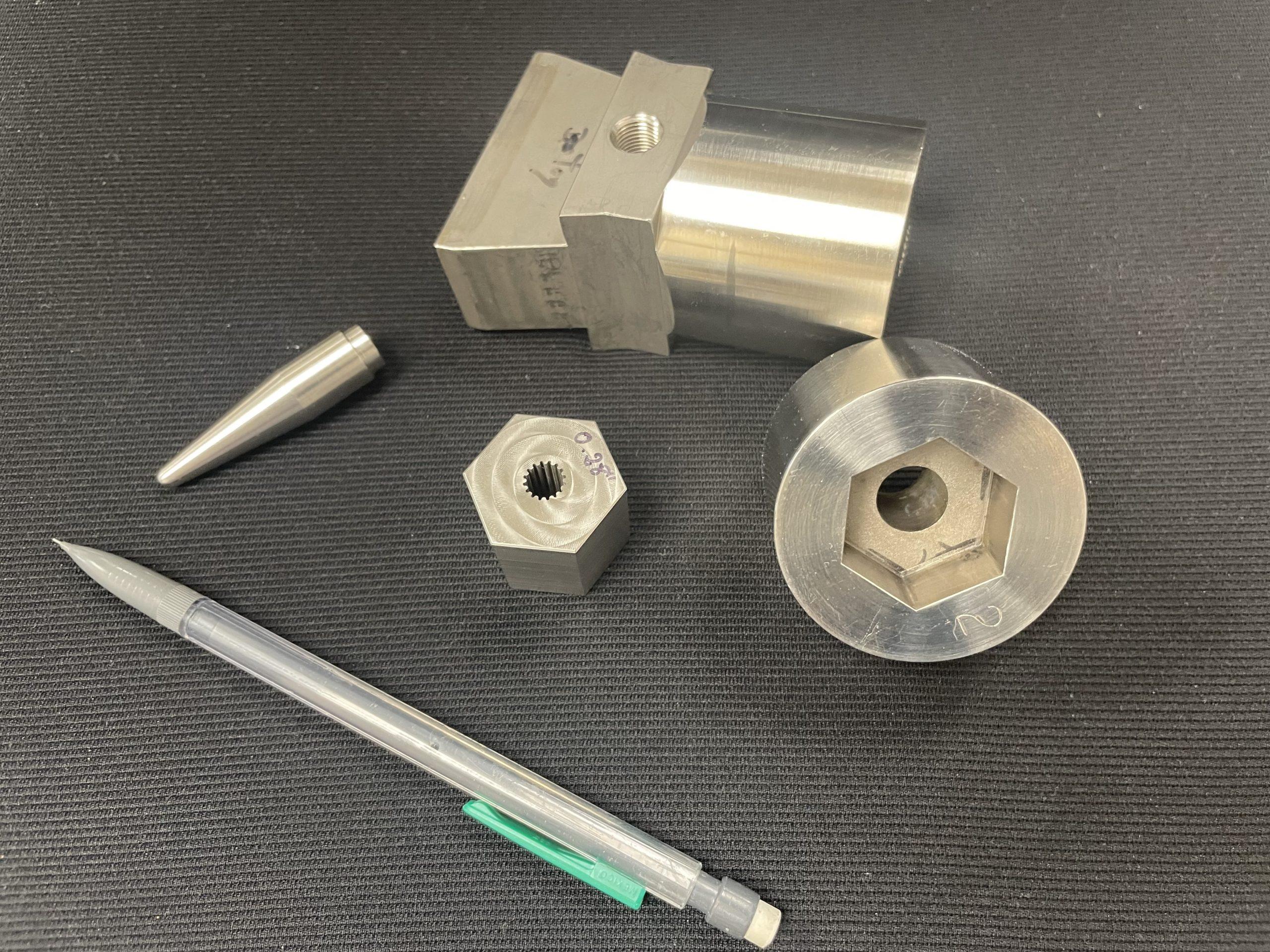
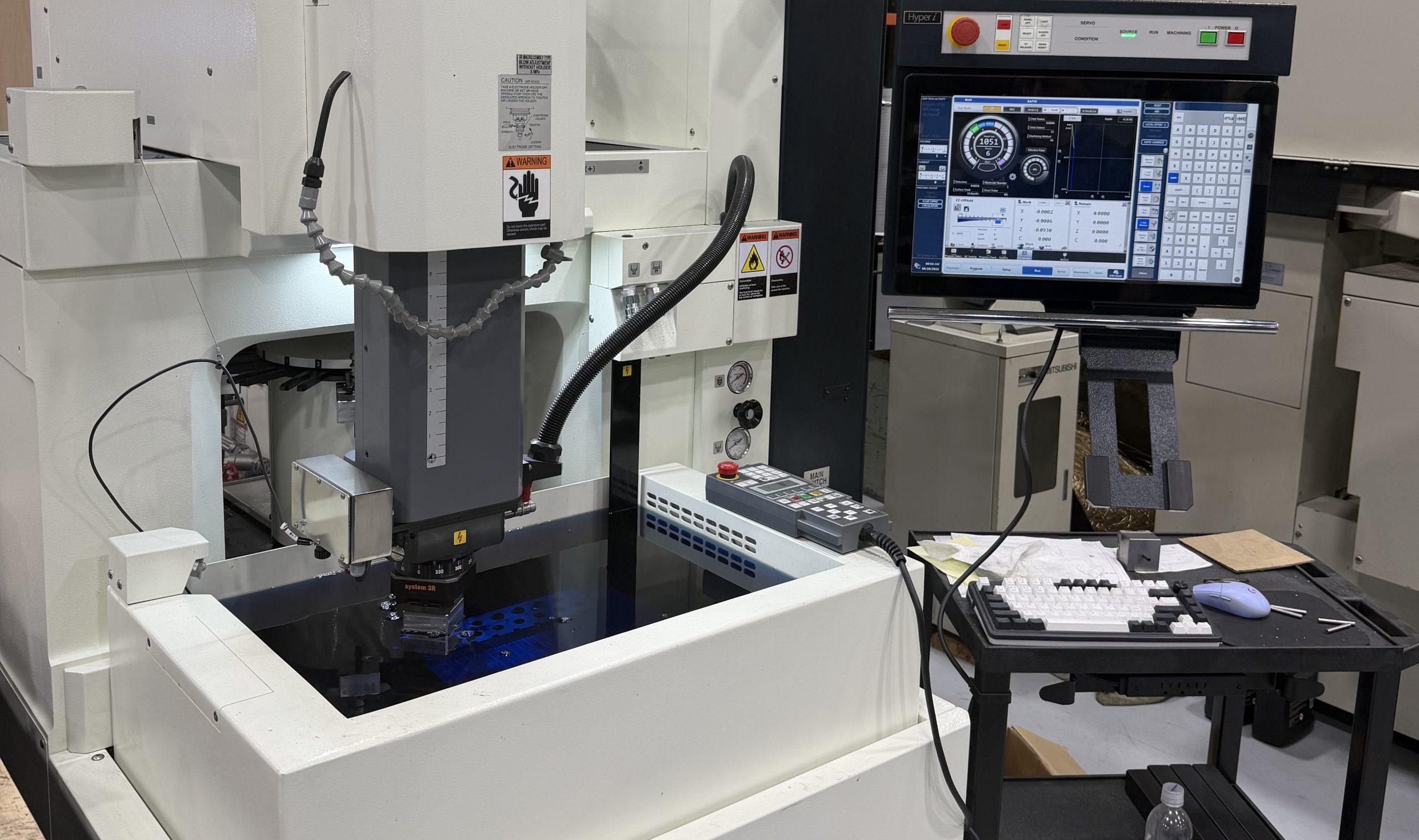
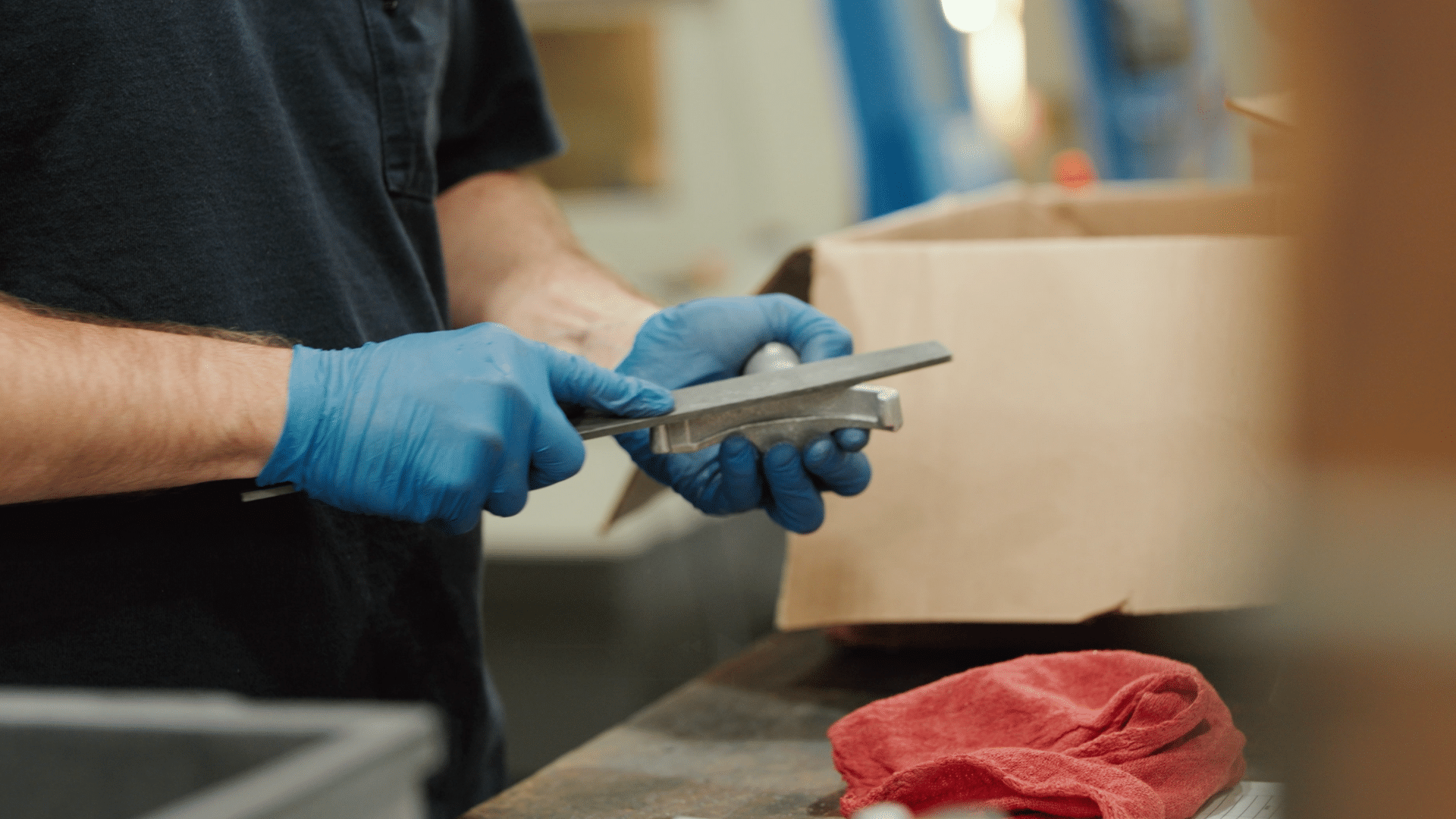
Low- to mid-volume precision machining, often with extremely intricate details, is the core of our work at Firstar. We’ve worked with manufacturing and engineering teams across defense, industrial assembly, telecommunications and more to make the unit economics make sense for their programs.
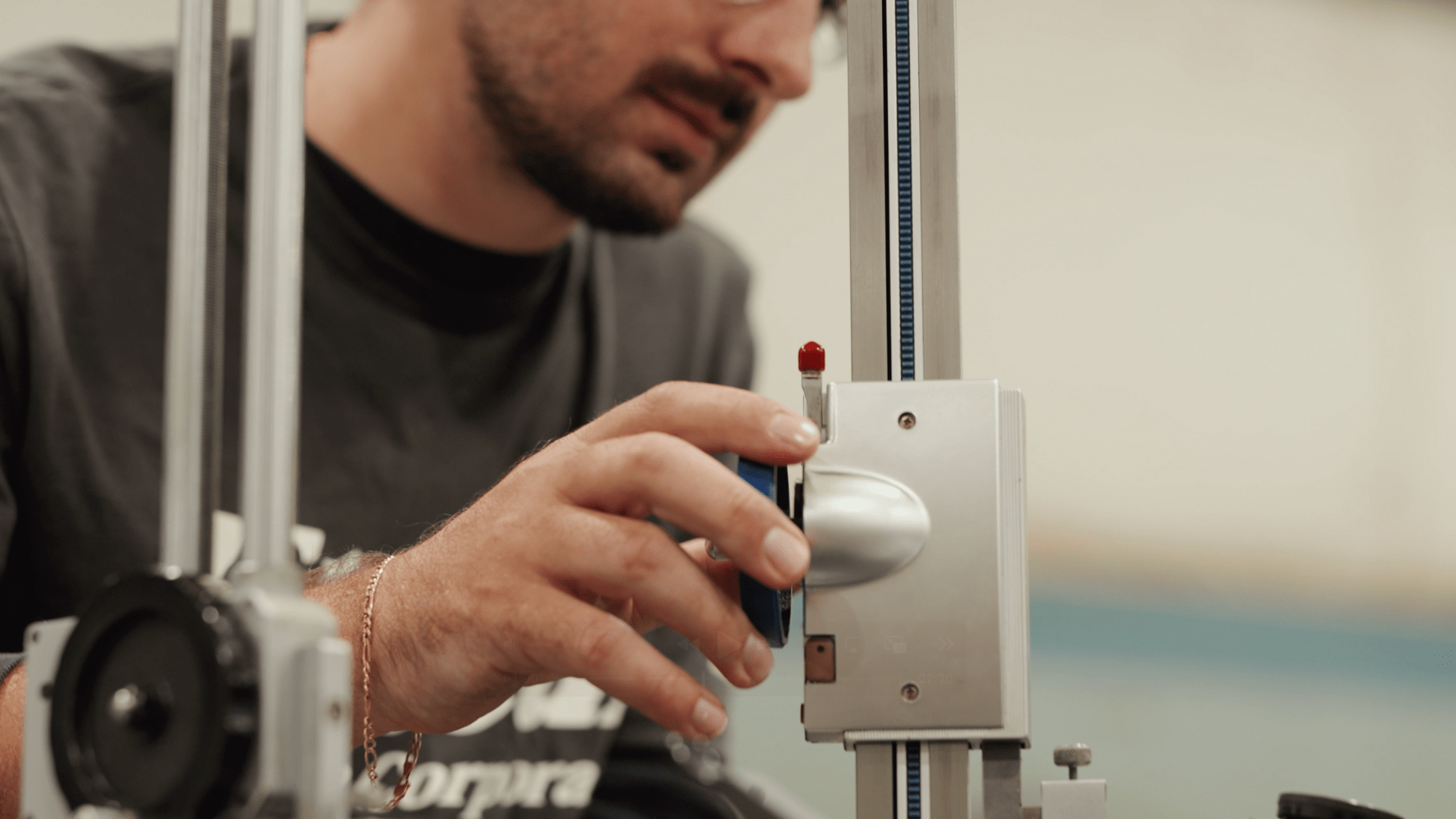
Since many of the components we machine use expensive, specialty materials, we take pride in managing small production runs done right the first time. Our team reviews design for manufacturability (DFM) before production begins, so tolerance stack-ups, material choices, and risky features get addressed as early as possible. Our quality management system is certified to ISO 9001:2015.
Because we’re based in Ohio, a design question becomes a phone call for real-time collaboration rather than a week of back-and-forth emails. We regularly invite customers to our facility to see their parts in production and understand our full range of capabilities.
What This Looks Like in Practice
We have a customer in the industrial assembly industry who previously outsourced the manufacturing of a family of components to Taiwan as their primary supplier and Firstar as a secondary source. This company has variable volumes on their orders and needs to work closely with their suppliers.
A few years ago, they were experiencing quality issues in the parts coming from Taiwan and on several occasions needed to fix or re-manufacture components at Firstar to meet their production deadlines.
As these issues continued, they have transferred more of their production to our shop for stronger reliability and flexibility on order volumes. This situation is a common example of why a U.S. company might choose to reshore work they have previously taken to an overseas supplier.
Which Parts Should You Onshore?
Onshoring vs offshoring doesn’t mean every part is produced in one country. The strongest strategies often assign each part family to the outsourcing model that fits best. Here are a few factors to consider.
| Factor | Best for Offshoring | Best for Onshoring |
|---|---|---|
| Annual volume | Steady volumes in the thousands | Low- to mid-volumes, prototypes, or variable demand |
| Complexity and tolerance | Simple geometry with standard tolerances | Tight tolerances, complex geometries, and specialty materials |
| Design maturity | Stable designs that rarely change | Evolving design with expected revisions |
| Schedule sensitivity | Predictable demand with room for long lead times | Time-critical programs where a late part stops production |
| Regulatory status | Commercial parts with no export or sourcing restrictions | ITAR-controlled, Controlled Unclassified Information, or subject to DFARS sourcing rules |
| IP risk | Commodity parts with little to no proprietary content | Proprietary designs or processes you need to protect |
Onshoring for Defense Programs
For many defense projects, onshoring vs offshoring isn’t really a question. The requirements are already set in the terms of the contract. Export controls and cybersecurity requirements favor domestic production and, in some cases, make offshoring production unlawful without government authorization.
If you’re managing a program tied to a DoD contract, look for the following regulations in your contracts:
- ITAR and Export-Controlled Technical Data. The International Traffic in Arms Regulations (ITAR) controls defense articles and their technical data. Sending ITAR-controlled drawings or specifications to a foreign supplier is considered an export and will require authorization by the U.S. government. Learn more about ITAR and related requirements here.
- DFARS Domestic Sourcing Requirements. The Defense Federal Acquisition Regulation Supplement (DFARS) requires specialty metals used in DoD projects, including titanium, zirconium, and certain steel, nickel, and cobalt alloys, to be melted or produced in the United Sates or another qualifying country.
- CMMC and Controlled Unclassified Information. The Cybersecurity Maturity Model Certification (CMMC) is becoming an increasingly common mandate in DoD contracts. It requires contractors that handle CUI to safeguard the information through extensive, verified cybersecurity controls. Learn more about CMMC requirements here.
The Bottom Line of Onshoring vs Offshoring
The lowest unit price and the total cost of production don’t always point to the same supplier. For high-volume, simple parts, offshoring can bring significant cost savings. For low-volume, complex parts and those regulated by the US government, onshoring provides the better outcome for reducing costs.
Start with total cost of production, not just the unit price, and the right answer for each part becomes much more clear.
Qualify Firstar for Your Program
Firstar is a full-service precision machining company located in Brunswick, Ohio, USA. Firstar manufactures tight tolerance components for the medical, defense, food processing, industrial assembly, and hydraulics industries. With our highly trained team of engineers and machinists, state-of-the-art equipment, and quality department certified to ISO 9001:2015, Firstar manufactures even the most complex parts economically and reliably, enabling us to be a value-added partner for our customers.
Firstar holds ISO 9001:2015, CMMC Level 2, JCP, and ITAR registration, and we run our shop floor to the industry standards each one requires — not just the paperwork behind them. If your program needs a trusted partner in domestic contract manufacturing, we’d welcome the conversation.