Selecting a Planetary Gearbox Manufacturer: Key Considerations for Optimal Performance
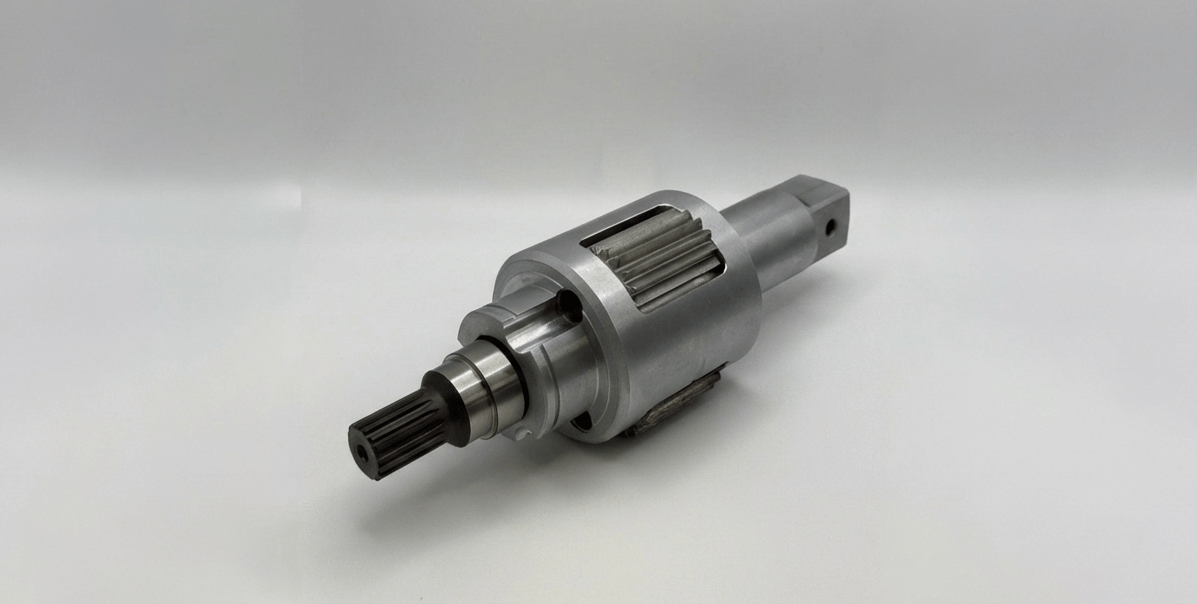
Planetary gearboxes are used in nearly every manufacturing environment, from aircraft landing gear mechanisms to robotic arms to concrete mixers. These highly engineered components enable the performance of your products. Choosing the right manufacturer is a critical decision.
Here we’ll provide an overview of planetary gearboxes, their operational principles, and the pivotal factors to consider when choosing a manufacturer. Our team at Firstar has produced countless planetary gear systems and have learned what it takes to ensure that every component contributes to smooth operation and long-lasting reliability.
This article will provide you with the knowledge you need to make informed decisions that ensure high performance and long-term reliability for your applications.
Understanding Planetary Gearboxes: An Overview
What is a Planetary Gearbox?
A planetary gearbox is a specialized gear train characterized by its arrangement of gears, which mimics the solar system. It consists of a central sun gear, surrounded by multiple planet gears that orbit the sun gear while meshing with an outer ring gear. This intricate design allows for high torque density, compactness, and excellent efficiency.
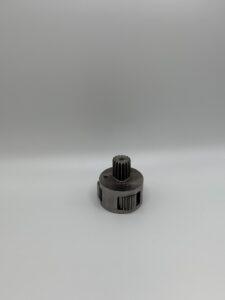
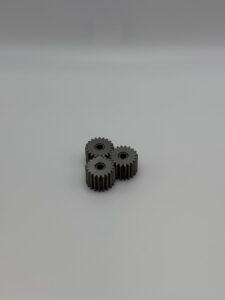
The Core Components of a Planetary Gearbox
Understanding the individual components is crucial to appreciating the operational mechanics and advantages of these systems:
- Sun gear: Positioned at the center, the sun gear is the input gear, driven by a motor or prime mover. Its rotation drives the planet gears.
- Planet gears: These gears mesh with the sun gear and orbit around it. They are typically mounted on a planet carrier, which serves as the output shaft in many configurations.
- Planet carrier: This component holds the planet gears and dictates their orbital path. It often acts as the output shaft, delivering the reduced speed and increased torque.
- Ring gear (annulus): This is an internal gear that encases the sun and planet gears. It meshes with the planet gears and is typically held stationary, though it can also serve as the input or output in specific designs.
- Housing: The external enclosure that protects the internal components, facilitates lubrication, and provides mounting points.
How Planetary Gearboxes Operate
The operational principle of a planetary gearbox is both elegant and efficient.
When the sun gear rotates, it drives the planet gears. Because the planet gears are also meshed with the stationary ring gear, they are forced to rotate on their own axes while simultaneously orbiting the sun gear. This dual motion of rotation and revolution transfers the input power through the planet carrier to the output shaft.
The gear ratio is determined by the number of teeth on each component, offering significant speed reduction and torque multiplication within a compact space. This mechanism results in a highly balanced load distribution across multiple gear teeth, contributing to the system’s robustness and extended operational life.
Primary Applications of Planetary Gearboxes
The intrinsic advantages of planetary gearboxes make them perfect for many industrial applications where precision, compactness, and high torque are the priority:
- Industrial assembly tools: Reduce motor speed while multiplying output torque to achieve precise torque control and repeatable fastening or press-fit operations.
- Robotics and automation: For precise motion control and high torque density in robotic arms, automated guided vehicles (AGVs), and industrial machinery
- Aerospace: In flight control surfaces, landing gear mechanisms, and engine systems where reliability and weight are critical
- Medical equipment: For surgical robots, diagnostic imaging systems, and patient positioning devices requiring silent, accurate, and powerful operation
- Renewable energy: In wind turbines for pitch and yaw control, and in solar tracking systems.
- Construction machinery: For excavators, cranes, and concrete mixers, where high torque and robust performance are essential
- Machine tools: In CNC machines and lathes, demanding high precision and rigidity
Planetary Gearbox Requirements Vary by Application
Across all of these applications, planetary gearboxes serve the same fundamental purpose: controlling output speed while multiplying torque. But the complexity of the parts vary across applications. The performance demands placed on a gearbox (and the consequences of getting them wrong) depend on how and where the system is used.
For example, an industrial assembly tool fastening bolts on a wind turbine operates under very different conditions than one used on a truck assembly line. Wind turbine fasteners often require extremely high torque, long duty cycles, and consistent performance in harsh outdoor environments. Automotive assembly tools, by contrast, may prioritize speed, repeatability, and tight torque tolerances across thousands of cycles per shift in a controlled factory setting. Both rely on planetary gearboxes, but the design priorities and tolerances are fundamentally different.
At Firstar, manufacturing gearboxes across a wide range of industries has reinforced a core truth: application context drives part requirements. Understanding those nuances upfront is critical to achieving performance, reliability, and service life targets.
Our team has seem firsthand how planetary gearboxes may be a common solution across industries, but there is no one-size-fits-all design. Careful consideration of load profiles, environmental conditions, and integration requirements is what separates a gearbox that merely works from one that performs reliably.
Common Difficulties in Planetary Gearbox Manufacturing
Manufacturing high-quality planetary gearboxes presents unique challenges that distinguish leading manufacturers. Recognizing the ability to over come these difficulties is crucial for assessing a manufacturer’s capabilities.
Lead Times
Producing precision planetary gearboxes involves complex processes across multiple vendors, from material sourcing and heat treatment to intricate machining and assembly. This often results in extended lead times, especially for tight tolerances or specialized alloys. It’s not uncommon for lead times to stretch 20–26 weeks, creating downstream delays for production schedules and system integration.
Planetary gearbox components are common parts in Firstar’s shop, allowing us to reduce lead times by an average of 80% and deliver in as little as five weeks. Our operators are deeply experienced in machining gearbox components and our equipment, tooling, and inspection processes are already configured for these geometries and tolerance requirements. We can slot gearbox work into production quickly without extensive setup.
Minimum Volume Requirements
Due to the specialized tooling, setup costs, and engineering overhead involved, many manufacturers have minimum volume requirements. This can be a hurdle for customers needing small batches or single custom units.
At Firstar, we’re willing to reprioritize production schedules to respond to immediate customer demand, whether that’s a prototype, a low-volume run, or ongoing production. Our goal is to help customers move forward without being constrained by rigid minimum order policies. No matter the size of the batch, every order matters to us.
4 Key Considerations When Selecting a Planetary Gearbox Manufacturer
The choice of manufacturer is as critical as the gearbox specification itself. Here’s what to look for.
1. Manufacturing Expertise and Quality Control
Prioritize manufacturers with a demonstrated history of excellence in gear technology. Assess their adherence to international quality standards (e.g., ISO 9001), their precision machining capabilities, and their rigorous quality control protocols at every stage of production.
2. Customization Capabilities and Engineering Support
Rarely does a standard gearbox perfectly meet unique application requirements. Evaluate a manufacturer’s capacity for customization, including modifications to gear ratios, mounting configurations, shaft designs, and material selections. Make sure they offer expert engineering support for design, simulation, and application-specific optimization.
3. Product Range and Application Specialization
A comprehensive product portfolio indicates a manufacturer’s broad expertise. Consider if they’ve produced a diverse range of planetary gearboxes suitable for various power ranges, speeds, and environmental conditions.
4. Quality of Materials
The reliability and longevity of a planetary gearbox are directly attributable to the quality of its materials and the robustness of its design. Ask about the materials used for gears (e.g., case-hardened steel), bearings, and seals. Advanced heat treatment processes and optimized gear tooth geometries are indicators of superior design intended for extended operational life.
Strategic Selection for Superior Results
Picking the right planetary gearbox manufacturer is a strategic investment in the performance, reliability, and longevity of your critical systems. By evaluating manufacturing expertise, customization capabilities, product quality, and post-sales support, you can mitigate risks and ensure that your chosen partner delivers solutions that not only meet but exceed your operational requirements.
Prioritize a manufacturer who embodies precision, reliability, and advanced engineering for a maximized return on your investment. At Firstar, we specialize in crafting high-performance components for gear reduction systems in industrial hand tools. We machine planet gears to the exact tolerances required for peak torque requirements. Firstar can help you elevate your product performance with expertly crafted gear components — contact us today.