Aerospace CNC Machining: The Fascinating History of Plane Parts
Few industries have driven manufacturing technology forward as relentlessly as the aerospace industry. From the moment the Wright Brothers coaxed their Flyer into the air in 1903, the demands of flight have continuously pushed the limits of how metal and composite parts can be made. Extreme tolerances, lightweight structures, and performance under violent stress and temperature swings have challenged the makers of machined parts.
Aerospace CNC machining sits at the intersection of materials science, engineering physics, and precision machining. To understand why it matters today, it helps to look at how it evolved.
Before CNC: The Age of the Skilled Machinist
Early Aerospace Manufacturing (1900s–1930s)
In the earliest days of powered flight, aircraft components were made almost entirely by hand. The Wright Brothers’ workshop was closer to a bicycle shop than a factory. The engine block of the 1903 Flyer was cast from aluminum alloy and manually machined on a lathe by Charlie Taylor, their mechanic, in just six weeks. Every cut was guided by the hands and eyes of a high-quality craftsman.
The key manufacturing methods of this era included:
- Manual lathes: Used to turn cylindrical components such as shafts, bushings, and engine cylinders. The machinist controlled depth of cut, feed rate, and finishing entirely by feel and measurement.
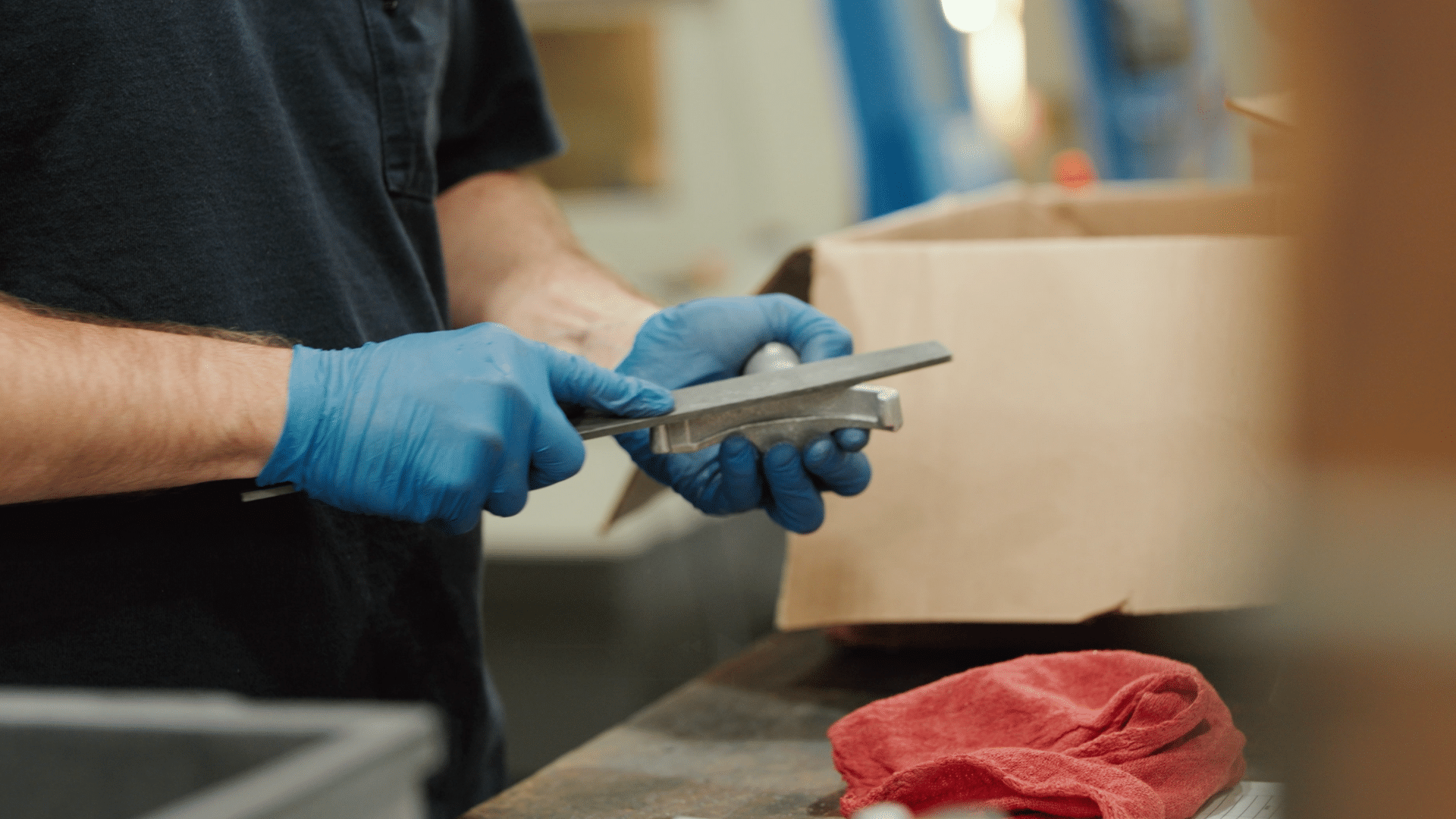
- Hand filing and fitting: Critical mating surfaces were hand-filed to achieve the tolerances required for a proper fit. Skilled fitters could achieve tolerances of around ±0.002 inches — remarkable for handwork, but inconsistent by later quality control industry standards.
- Wood and fabric construction: The primary structural materials of early aircraft parts — spruce, ash, linen — required woodworking tools rather than metalworking machines. Precision came from the pattern-maker’s craft, not a manufacturing process.
- Drop forging: Engine components requiring greater strength were drop-forged, then hand-finished. This produced stronger grain structures than casting but still required extensive manual work to reach final dimensions.
The critical limitation of this era? Repeatability. Every part was effectively a custom piece. If an aircraft needed a replacement propeller hub, a machinist had to reproduce it from scratch, often re-measuring against the original. There was no concept of interchangeable parts at the level that would later become essential to high-volume wartime production.
World War I: The Dawn of Industrial Aircraft Production (1914–1918)
The First World War transformed aircraft from experimental curiosities into state-of-the-art industrial products. Governments needed thousands of aircraft, and they needed them fast. That demand forced rapid industrialization of aircraft manufacturing and brought new machines and methods into widespread use.
Production lathes with jigs and fixtures replaced purely freehand work for engine cylinders. Milling machines, which were already used in general metalworking, were adapted for aircraft use to produce flat surfaces, slots, and brackets.
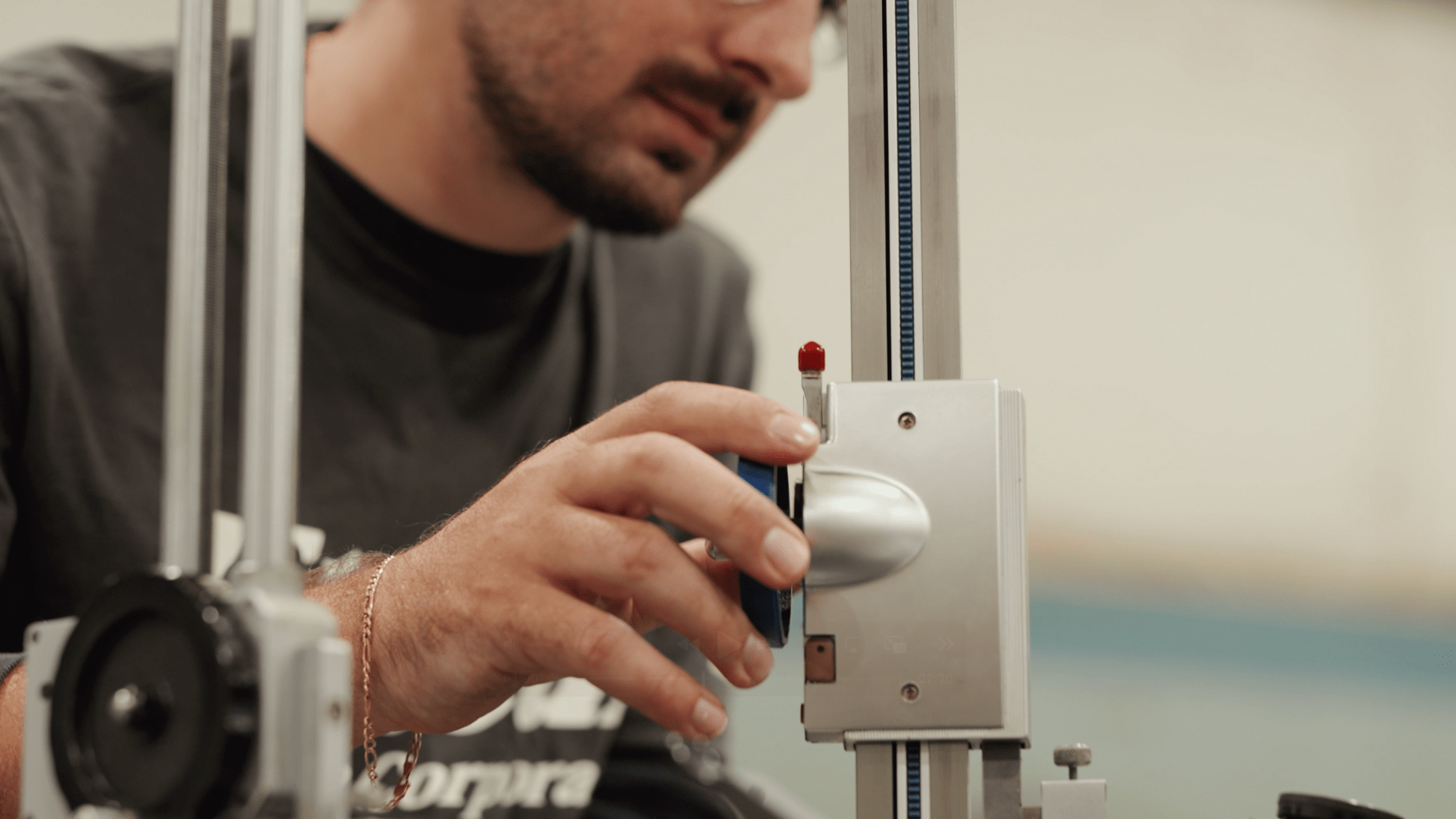
Even so, the process remained fundamentally human, and ripe for human error. Tolerances were checked by hand with micrometers and gauge blocks, and any iteration out of spec was hand-fitted or scrapped.
World War II: Mass Production and the Limits of Manual Machining (1939–1945)
The Second World War represents the peak of manual and semi-automatic machining for aerospace companies. The United States alone produced nearly 300,000 military aircraft between 1939 and 1945, a scale that pushed every available manufacturing technique to its limit.
Tracer lathes and copy mills became essential. These machines followed a physical master template with a stylus to guide the cutter, allowing complex contoured shapes to be reproduced faster than freehand machining. But every copy inherited every error in the master, and changing a design meant starting a new master from scratch.
The key manual and semi-automatic techniques in widespread use by 1945 included:
- Engine lathe work
- Jig boring
- Surface and cylindrical grinding
- Broaching
- Hand scraping
The central problem with all of these methods was the dependence on the human operator. Even with the best jigs, fixtures, and machine tools, the quality of the output was tied directly to the skill and attention of the person doing the work.
The Birth of Numerical Control
The MIT Breakthrough (1949–1952)
The conceptual breakthrough that would ultimately transform aerospace manufacturing was made not on a factory floor, but at the Massachusetts Institute of Technology.
In 1949, the United States Air Force contracted MIT to develop a system that could automate the machining of complex airframe components — specifically, the curved, sculpted helicopter rotor blades and wing skins that were becoming essential to next-generation aircraft but were extraordinarily difficult to machine consistently by hand.
The project, led by John Parsons and refined by MIT’s Servomechanisms Laboratory, produced the first numerically controlled milling machine in 1952.
The machine read punched paper tape containing numerical coordinates and used servo motors to drive the cutting tool along a programmed path.
It was slow, expensive, and temperamental — but it worked. For the first time, a complex three-dimensional surface could be machined with no moment-to-moment human intervention, guided entirely by a set of numbers encoded on a strip of paper.
From NC to CNC: The Microprocessor Changes Everything (1970s)
The difference between NC and CNC — Computer Numerical Control — is an onboard computer.
Early NC machines were controlled by external computers or, more commonly, read directly from punched tape with no ability to store or edit programs.
Thanks to the microprocessor revolution of the early 1970s, CNC machines moved the computer onto the machine itself.
This changed everything. CNC machines could now store multiple programs in memory. Operators could edit a program at the machine without re-punching tape. The machine could perform its own diagnostics and, increasingly, automatically compensate for tool wear and thermal expansion. The price of programming fell dramatically, and CNC became cost-effective for a much wider range of manufacturers.
Modern Aerospace CNC Machining
Five-Axis Machining: The Aerospace Gold Standard
The defining CNC capability for aerospace is five-axis simultaneous machining — movement in three linear axes (X, Y, Z) while simultaneously rotating in two rotational axes (A and B). This allows complex compound curves, undercuts, and multi-face features to be machined in a single setup.
Without five-axis capability, a complex part might require four or five separate setups on different machines, with each re-fixturing inviting error. Five-axis machining reduces setups, cuts down on error stack-up, and allows the tool to approach the work at the optimal angle for finish and tool life. This is all critical when scrap rates on titanium and superalloy billets must be kept to an absolute minimum.
Most Common Applications for Aerospace CNC Machining
A common thread across all five of these aerospace applications is the combination of difficult materials, complex geometry, and zero tolerance for failure. This is precisely why CNC has become so deeply embedded in aerospace manufacturing.
1. Turbine Engine Components
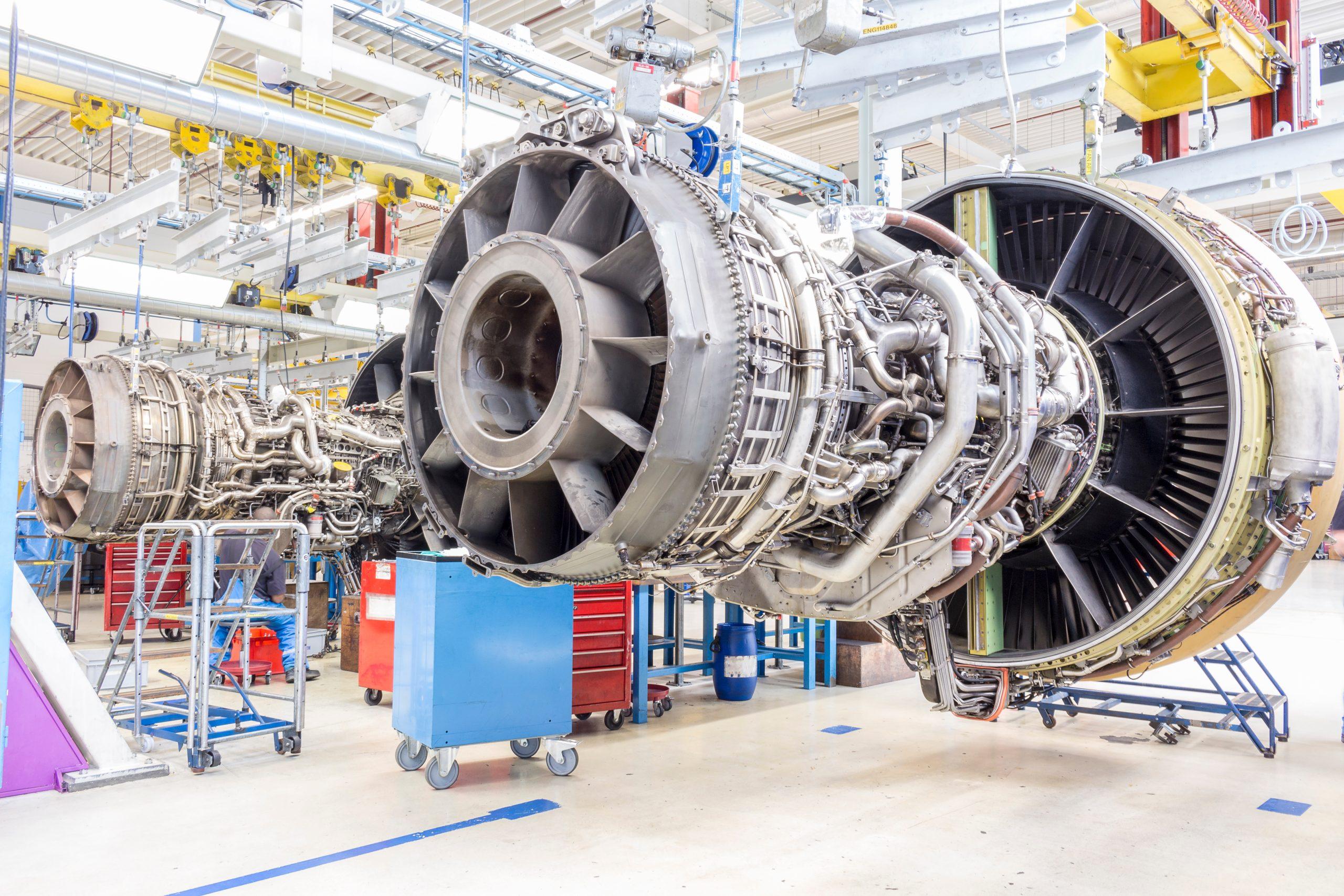
Jet engine parts are some of the most demanding CNC machining processes in any industry. For example:
- Turbine discs
- Compressor blades
- Impellers
- Combustor casings
Machined from nickel superalloys and titanium using five-axis simultaneous cutting, these precision parts require complex aerodynamic profiles and tolerances as tight as ±0.0005″ for safe operation at extremely low and high temperatures and rotational speeds.
2. Structural Airframe Parts
Wing spars, fuselage frames, bulkheads, and ribs are routinely hogged from large aluminum or titanium billets — with CNC mills removing up to 90–95% of starting material to produce lightweight, complex structures.
The Boeing 787’s titanium mid-spar fittings are a well-known example: massive billets machined down to high-precision sculpted structural members that would be impossible to produce consistently any other way.
3. Landing Gear Machined Components
Landing gear must absorb enormous repeated shock loads on an aircraft or spacecraft while staying as light as possible — a combination that requires high-strength steel and titanium machined to tight tolerances.
CNC machining services like turning, milling, and grinding produce:
- Actuator housings
- Trunnion pins
- Torque links
- Axle assemblies
The positional accuracy of bearing bores and hydraulic seal grooves is critical to safe operation.
4. Hydraulic and Fuel System Manifolds
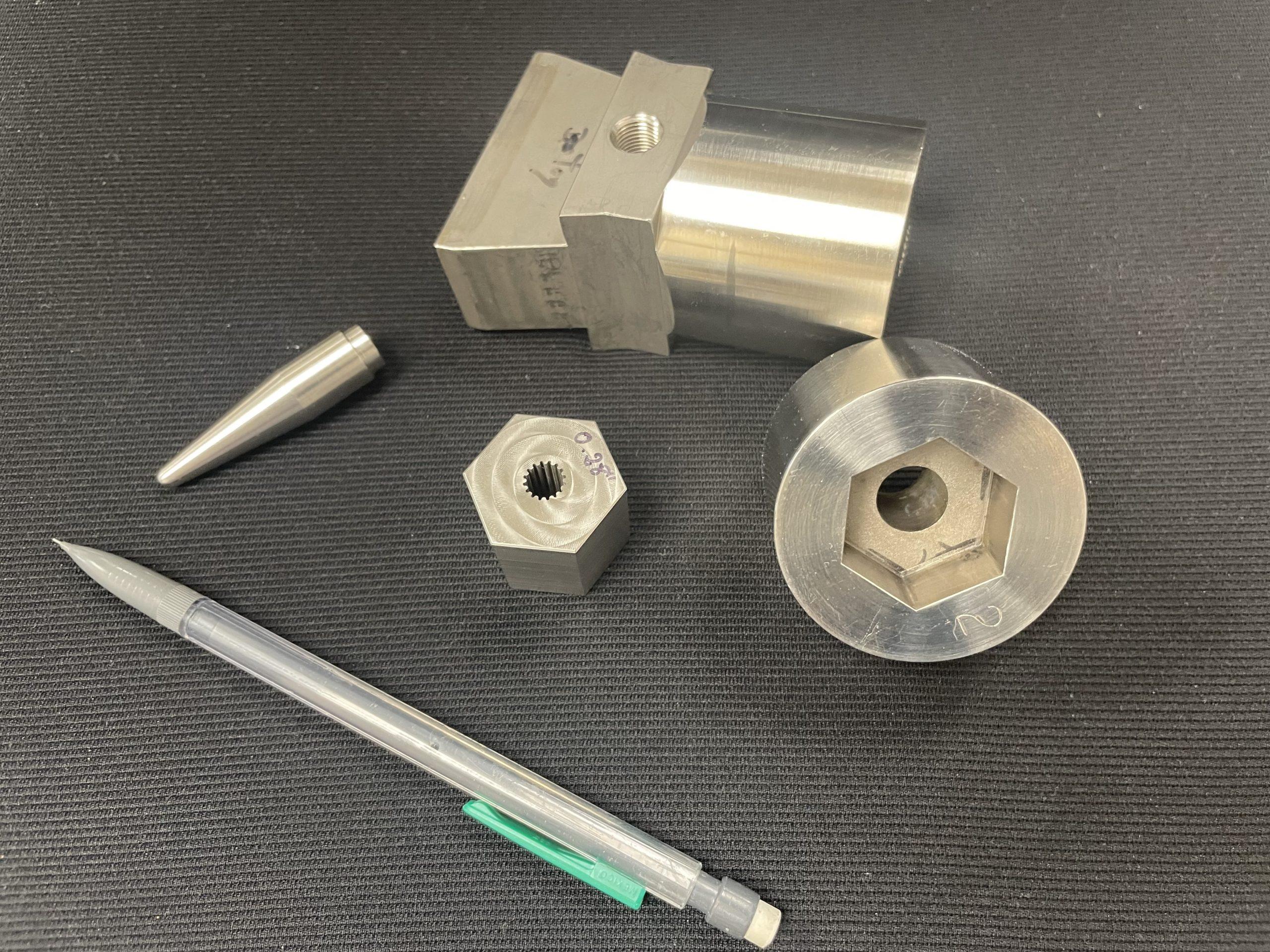
Aircraft hydraulic and fuel manifolds contain mazes of intersecting internal passages, precision-bored port seats, and threaded connections — all of which must be machined to exact dimensions to prevent leaks under high pressure.
Five-axis CNC machining operations allows all faces of a complex manifold block to be completed in minimal setups. This reduces positional error between features.
5. Avionics and Structural Housings
Electronic housings, instrument enclosures, radar mounts, and satellite communication brackets require CNC-machined aluminum enclosures that are both lightweight and precisely dimensioned for EMI shielding and component fit.
Thin walls, complex pocket features, and tight flatness requirements for sealing surfaces make these aerospace parts well-suited to high-speed CNC milling with in-process probing.
The Next Wave of Innovation
The evolution from Charlie Taylor’s manual lathe to a modern 5-axis CNC machining center is one of the great manufacturing stories of the last century. At every stage, it was driven by the same relentless demand: lighter, stronger, more precise, more repeatable.
Precision CNC machining didn’t replace skilled machinists — it absorbed their knowledge, codified it in high-performance programs and toolpath strategies, and made it reproducible. The craftsman’s intuition has become sensor data, adaptive control algorithms, and AI-assisted process optimization and automation.
What hasn’t changed is the fundamental challenge: Aerospace components must work perfectly, in extreme conditions, with human lives depending on them. That requirement drove a century of manufacturing innovation in the aerospace sector, and it will continue to drive whatever comes next.