CNC Plastic Parts: A Complete Guide to Materials, Tolerances, and Industrial Applications
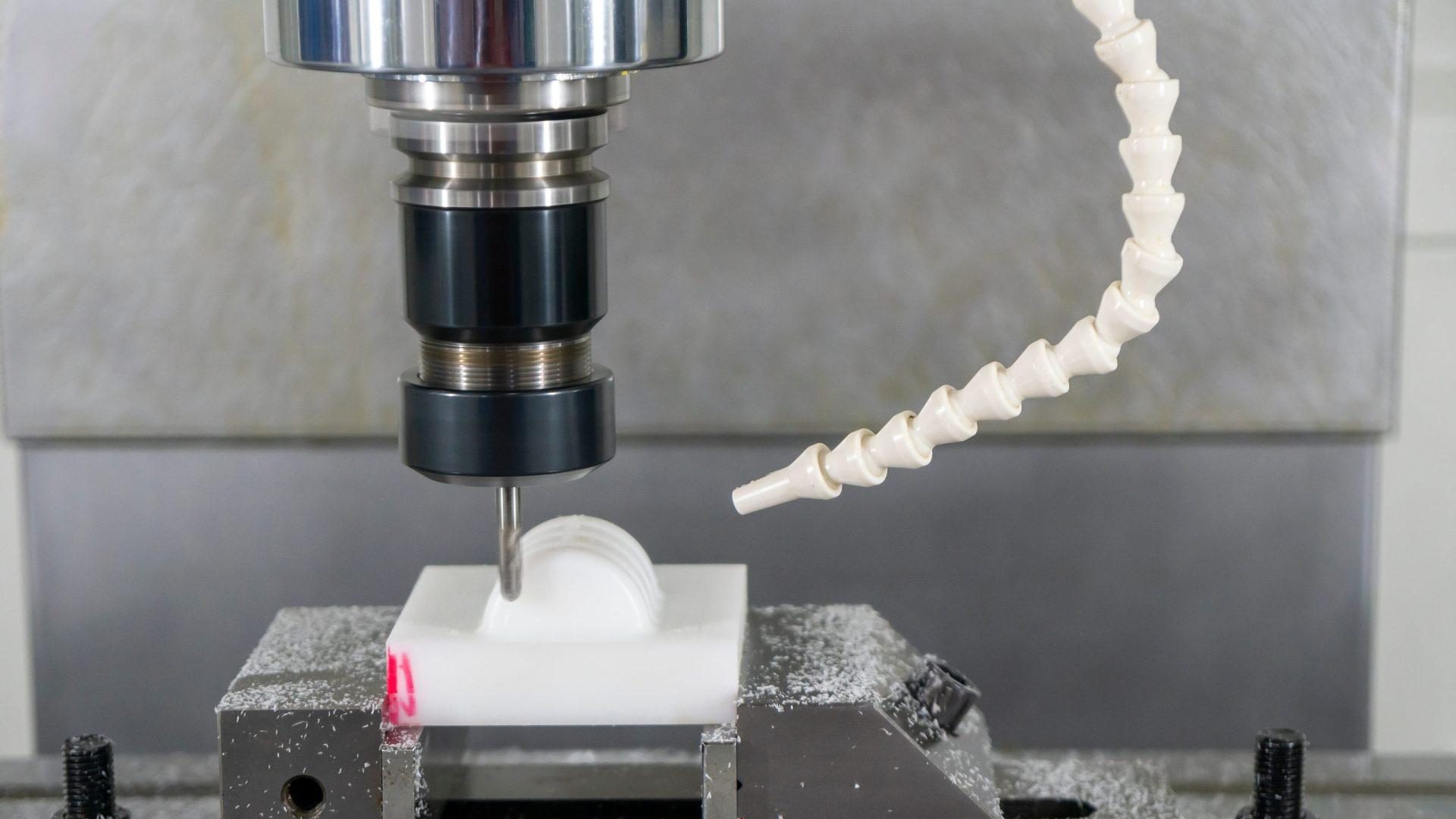
When most people think about CNC machining, they think about aluminum, steel, or titanium. But some of the most critical components in aerospace, medical devices, automation systems, and semiconductor equipment are made from plastic.
CNC plastic parts sit at the intersection of material science and precision manufacturing. To understand why they matter today, it helps to look at how they evolved.
The Evolution of CNC Plastic Parts
Plastics were being machined long before CNC machines became standard in shops.
Early materials like Bakelite (1907) were brittle but machinable. By the 1940s and ’50s, materials like Polytetrafluoroethylene (PTFE) were already being turned and milled into electrical insulators and chemical-resistant components. In the 1960s, Polyoxymethylene, commercially introduced as Delrin®, dramatically improved machinability and dimensional stability.
Shops were producing parts such as electrical insulators, bearings and bushings, early aerospace components, and chemical processing parts. But all of this was done manually on engine lathes and manual mills that limited complexity, repeatability, and tolerance control.
CNC technology began developing in the 1950s, but it wasn’t until the ’70s that CNC became commercially widespread. By the 1980s, materials like acetal, nylon, UHMW, and later PEEK were routinely machined on CNC equipment.
Why Plastics Took Off in CNC
The combination of better materials and programmable precision changed everything. Three forces drove widespread adoption:
1. Material Innovation
High-performance polymers like PEEK could survive heat, chemicals, and mechanical loads that earlier plastics could not. Engineers could now replace metal in specific environments without sacrificing reliability.
2. Cost and Weight Pressure
Plastics reduce weight, eliminate corrosion, and often reduce machining time compared to hardened metals.
3. Precision Demands
CNC made tight tolerances repeatable. Molded parts work well at volume, but for low- to mid-volume precision components, machining provided control that injection molding couldn’t economically match.
In aerospace, defense, medical devices, and semiconductor manufacturing, CNC plastic parts became the preferred way to produce precision components at controlled volumes.
CNC Plastic Parts vs. Additive Manufacturing
There’s a lot of noise around additive manufacturing (commonly known as 3D printing), and for good reason. It’s a powerful tool with a wide array of application, but it’s not a 1-to-1 replacement for precision CNC machining.
CNC machining is subtractive. You start with solid stock and remove material, producing consistent geometries and predictable performance.
The additive manufacturing process builds parts layer by layer. It excels at complex internal geometries and rapid prototyping. However, the surface finish is rougher, mechanical properties can vary by layer direction, and critical features often require post-machining anyway.
In precision environments, tolerance matters. CNC machining routinely holds ±0.001” to ±0.005”, depending on material and geometry. That level of repeatability is difficult to achieve directly off a printer.
For low- to mid-volume production, CNC also avoids tooling. There’s no mold fabrication or upfront capital investment, and designs can change without scrapping expensive tooling.
Many advanced manufacturers now use a hybrid approach of:
-
Print near-net geometry
-
Machine critical surfaces
But when precision fits, threaded features, bearing interfaces, or sealing surfaces are involved, CNC machined parts are more dimensionally stable than printed parts.
Acetal (Delrin® / POM)
Acetal is the most common plastic material we see at Firstar. It’s a frequent choice for engineering teams.
You may see the terms acetal and Delrin® used interchangeably. Delrin® is the brand name for a specific type of acetal resin (polyoxymethylene, or POM). It was developed in the 1950s by DuPont as a metal replacement for precision mechanical parts such as gears, bearings, bushings, and valve components.

DuPont was looking to create a material that would combine high stiffness, low friction, and dimensional stability. Their goal was that their product would hold better machinability than other materials like nylon.
Acetal quickly became one of the first plastics that engineers trusted for tight-tolerance machined components. Unlike other materials, it was designed from the start for industrial and mechanical performance, not textiles or consumer goods.
Today, acetal is a first-pick material because it behaves similar to aluminum during machining. It’s clean, consistent, and holds tight tolerances well while having low moisture absorption, low thermal expansion, and strong creep resistance.
That means parts like bushings, gears, precision wear components, and valve bodies hold their shape and perform well over time.
Acetal is more stable and machinable than nylon, less expensive than PEEK, stronger and stiffer than UHMW, and more predictable than ABS.
Nylon (PA6, PA66)
Originally designed as a state-of-the-art textile fiber, nylon has been adapted to be used as an engineering plastic known for its high strength, machinability, wear-resistance, and low cost.
Nylon was first developed in the 1930s by Wallace Carothers, a chemist working at DuPont. Carothers and his team were researching polymers when they created Nylon 66 (PA66). The “66” refers to the two six-carbon monomers used to make it (hexamethylenediamine and adipic acid).

DuPont’s first major commercial use was women’s stockings, which debuted in 1939 at the New York World’s Fair and became an instant success.
But World War II led to a significant pivot in the use of the material. Instead of stocking, nylon was used for parachutes, ropes, tire cords, and military webbing, which had previously been made of imported silk. Nylon gave the U.S. a domestically produced synthetic alternative with strong tensile properties.
Nylon 6 was developed slightly later in the late 1930s by German chemist Paul Schlack at IG Farben. Nylon 6 uses a different polymerization process (from caprolactam) but produces a material with similar properties to Nylon 66.
By the 1950s and ’60s, nylon was being extruded into rods and sheets and machined into industrial components. That’s when manufacturers began using the material for bushings, gears, washers, rollers, and structural components – applications that are still in use today.
Even with newer materials like PEEK and advanced composites available, nylon is still used for its high tensile strength, excellent abrasion resistance, good fatigue performance, and low friction characteristics.
The primary tradeoff in selecting nylon over another material is moisture absorption. Nylon can absorb water, which affects dimensional stability, something engineers must plan for in precision applications.
UHMW (Ultra-High Molecular Weight Polyethylene)
UHMW is commonly used for wear strips, guides, and liners due its excellent abrasion resistance, limited structural performance, and low friction.
The history of this high-performance material is less clear than others. Several teams developed and advanced UHMW processing in the 1950s and 1960s, such as Hoechst AG under the brand Hostalen. The goal was to create a plastic that could withstand extreme wear and impact.
One of the first uses of UHMW was replacing materials like leather and steel on machines such as conveyer belts or textile machinery that are subject to high vibrations. Its long polymer chains create exceptional abrasion resistance, making it suitable for high-impact environments.
Today, UHMW is commonly used for industrial wear liners, conveyor components, bulk material handling, and impact-resistant parts.
PTFE (Teflon®)
PTFE is known as an accidental material.
In 1938, chemist Roy Plunkett was working at DuPont to develop a new refrigerant gas. During one experiment, he opened a pressurized cylinder that should have released tetrafluoroethylene, but nothing came out.
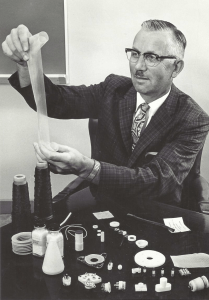
Instead of discarding the cylinder, he cut it open and found a white, waxy powder coating the inside. The gas had unexpectedly polymerized under pressure, forming what would become Polytetrafluoroethylene (PTFE).
The material’s properties were unlike anything available at the time. It was chemically inert, extremely slippery, and heat resistant, making it a suitable material for demanding military applications during World War II. It was later commercialized under the name Teflon® and used as a coating for cookware.
Today, that same accidental discovery plays a critical role in precision machined components. PTFE’s chemical resistance and low coefficient of friction make it ideal for seals, gaskets, valve seats, and insulating components in aggressive industrial environments. While it is softer than materials like acetal or nylon and requires careful design to manage creep under load, PTFE remains one of the most reliable materials for parts exposed to corrosive chemicals, high temperatures, or sliding contact. What began as a lab anomaly is now a foundational material in high-performance CNC machined plastic parts.
PEEK (Polyetheretherketone)
PEEK was developed in the late 1970s by Imperial Chemical Industries, which later spun off into Victrex.
Unlike nylon or ABS, the team at Victrex was looking to create a material for high-performance industrial environments like aerospace, oil and gas, and high-temperature systems where other plastics failed. It was engineered specifically to perform under extreme heat, aggressive chemicals, and high mechanical loads.
Today, it is used primarily for aerospace and medical applications as a high-performance thermoplastic.
It maintains high temperature capability, but comes at a premium material cost, making it most useful in low-volume products.
ABS (Acrylonitrile Butadiene Styrene)
Early development of ABS is attributed to BASF and others in the postwar polymer expansion era in the 1940s and 1950s.
The material was designed as a tough, impact-resistant plastic and a cost-effective alternative for consumer goods. In fact, Legos are made of ABS!
ABS was engineered for durability and moldability (not precision machining) but it has become machinable for light-duty, lower cost applications such as housings and enclosures, early stage prototypes, and automotive trim components.
Frequently Asked Questions About CNC Plastic Parts
What plastics can be CNC machined?
Common options include acetal, nylon, UHMW, PTFE, PEEK, ABS, and polycarbonate.
Are CNC plastic parts strong?
Yes. Many engineering plastics offer strong performance relative to weight and can replace metal in select environments.
How accurate are machined plastic components?
Tolerances of ±0.001” to ±0.005” are achievable depending on material and geometry.
Is CNC plastic machining expensive?
For low- to mid-volumes, it is often more cost-effective than molding because no tooling is required.
What industries use CNC plastic parts?
Aerospace, defense, medical, food processing, automation, and semiconductors are common industries that rely on CNC plastic parts.
What is the difference between Delrin and acetal?
Delrin® is a branded acetal homopolymer. Acetal refers to the broader POM material family.
When CNC Plastic Parts Make the Most Sense
CNC plastic parts are ideal when precision, flexibility, and material performance matter more than ultra-high volume.
They work best for low- to mid-production runs, engineered wear components, and mechanical assemblies requiring tight tolerances. With the right high-quality material and the right machining process, plastic components can deliver long-term reliability in demanding industrial environments.
If you’re evaluating a new design or revisiting an existing component, request a quote on your upcoming project and start the conversation with Firstar around material selection, long-term performance, and our CNC machining services.