The Challenges of Mission Critical Components Manufacturing for Defense

When a bracket fails on a consumer or commercial product, the user files a warranty claim. When a component fails inside a munition body, Unmanned Aerial Vehicle (UAV), or a control system protecting critical infrastructure, the stakes are much higher.
That’s the difference between commercial products and mission critical components for defense and aerospace applications. There may be similarities in the drawings, but the margin for error is not.
This article is for manufacturing engineers, procurement leads, and sourcing managers who are responsible for getting those parts made right the first time. We’ll cover the conditions that make mission critical work so demanding, the innovations changing what’s possible, and the qualities to look for when evaluating a new precision machining partner.
What Are the Key Challenges in Mission Critical Components Manufacturing for Defense and Aerospace?
Mission critical parts rarely reside in traditional environments. These are components that enable defense platforms, aerospace systems, energy equipment, and other critical infrastructure exposed to extreme conditions again and again. Five challenges come up in every engineering conversation:
- Rapid Thermal Cycling
- Temperature Extremes
- Size and Weight Constraints
- Intense Vibrations
- Tolerance Requirements
Rapid Thermal Cycling
Electronics housings in rugged telecomm systems, shims in gas turbine engines, and munitions that quickly move from storage to firing all heat and cool hundreds or thousands of times over their service life. Every cycle tests the strength and resilience of the material.
Where various metals or coatings meet, the small movements in each use can accumulate into fatigue cracks, loosened fits, and worn finishes.
Manufacturing methods directly affect how a part survives that cycling. Process control is a design requirement that will determine how the part performs when the stakes are highest.
Temperature Extremes
Continual exposure to extreme temperatures creates a new set of problems. At cryogenic temperatures, some alloys may lose their strength and become brittle. At high temperatures, metals creep and oxidize.
The materials chosen need to hold their shape whether at room temperature and their intended operating temperatures. Which all means clearances, material choices, and thermal expansion all need to be accounted for before the first cut.
Size and Weight Constraints
In drones, satellites, missiles, or armored vehicles, every ounce competes with something else. Necessary weight targets push engineers toward consolidated parts, thin walls, and lightweight materials such as aluminum and high-strength aluminum. Each of these decisions makes the part more complex to machine.
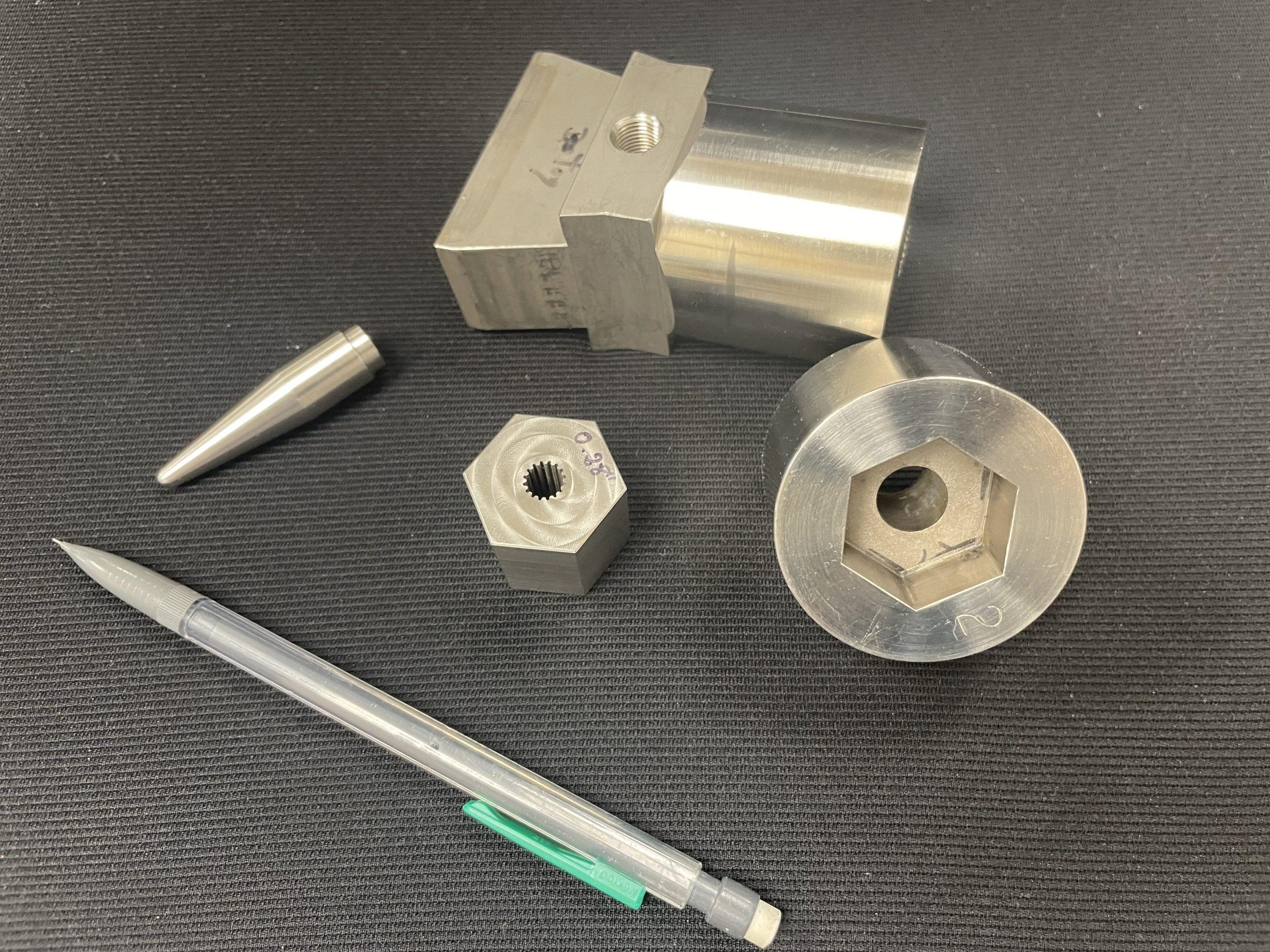
Consolidated geometries mean more features held to tighter tolerances. When an entire component fits in the palm of your hand, a few ten-thousandths of an inch can represent a meaningful percentage of a critical feature.
Firstar’s team of engineers, quality specialist, and machinists specialize in tight tolerance, highly engineered components small enough to fit in the palm of your hand. Our shop is certified to ISO 9001:2015, JCP, CMMC Level 2, and ITAR-registered. We are equipped to handle the most complex engineering challenges in mission critical components manufacturing.

Intense Vibrations
Wheeled vehicles, flights, and launch loads all subject components to constant vibration. Over time, this vibration can drive high-cycle fatigue and lead to surface finish erosion and loosening of tolerances.
Every part must be engineered and manufactured to handle this stress in performance.
Tolerance Requirements
All of these conditions pressure the designs toward tighter tolerances: bearing fits, sealing surfaces, and mating features that must align perfectly at final assembly. In high-volume production, a scrapped part can be absorbed in the run. In low- to mid-volume work, which is typical to the defense and aerospace industries, there is little to no buffer. Quality inspections become just as important as machining capability.
Any of these conditions alone is manageable through a few design iterations. Mission critical components face nearly all these conditions at once and require program leaders and their machining partners to collaborate closely.
What Should You Look for in a Manufacturer of Mission Critical Components?
Whether or not a shop has the machines you need is only a small part of the equation. What separates a mission critical manufacturing partner from the average shop is the systems behind the machines.
Certifications That Match Your Program
Certifications provide third-party evidence that a supplier’s processes are documented and repeatable. Which certifications are needed will depend on your program and contract requirements, but these are the credentials that come up most often in mission critical components:
- ISO 9001:2015. This is the baseline quality standard that ensures the supplier has a working quality management system covering process control, corrective action, and continual improvement.
- AS9100. This standard builds on ISO 9001 with quality and material traceability requirements specific to the aerospace industry. Many aerospace OEMs expect it from their supply base.
- ITAR registration. Required for U.S. manufacturing of components for defense articles on the U.S. Munitions List.
- Cybersecurity Maturity Model Certification (CMMC). The DoD’s cybersecurity certification for anyone handling Federal Contract Information and Controlled Unclassified Information. Level 2, certified by a C3PAO, is the typical contract requirement.
- JCP Certification. The Joint Certification Program authorizes access to export-controlled unclassified technical data between the U.S. and Canada’s Department of National Defense.
Firstar is ISO 9001:2015 certified, ITAR-registered, CMMC Level 2 certified with C3PAO verification, and a JCP approved supplier. You can review our credentials here.
An Engineering Partnership That Goes Beyond the PO
The best outcomes on mission critical programs happen when the machining partner is involved before the first part is cut.
For example, a great partner will provide a Design for Manufacturability (DFM) review that catches potential issues before they become scrap material, rework, or missed deliveries. This could include tolerances tighter than the function requires, features that force extra setups, internal corners that cannot be reached, and material choices that will quietly stretch lead times.
Firstar applies DFM throughout the development process, not as a one-time drawing check. We review prints with your engineers, explain tradeoffs behind our recommendations, and tell you plainly when a requirement will drive cost and lead time.
From there, our end-to-end manufacturing solutions let you place the PO and receive finished, inspected parts. We manage machining, outside finishing through our vendor network, and inspection from our facility in Brunswick, Ohio. With our kanban program and just-in-time fulfillment system, parts can be stocked at our facility and shipped when your final assembly and commissioning schedules call for them.
Outsourcing a critical component is a legitimate risk to your program’s timeline and performance. The way to mitigate this risk is by seeking a partner who goes beyond cutting material and becomes a true extension of your team.
The Bottom Line of Mission Critical Components Manufacturing
Components used in defense and aerospace programs face thermal cycling, temperature extremes, weight constraints, and more. Engineers are constantly expanding what’s possible but each choice raises the bar for the manufacturer that has to make the part.
The right partner brings more than machining capabilities. Look for verified certifications that match your program requirements, and engineering-first approach, and a partner that acts and feels like an extension of your team. Making a critical choice in your machining partners will lead to more predictable lead times and reliability of your parts.
Tak to Firstar About Your Next Part
If you’re sourcing precision-engineered components for a defense, aerospace, or critical infrastructure program, share your drawings and requirements with our team. We will review them for manufacturability and give you an honest assessment of what it will take to deliver them on time and to spec.
Email sales@firstarcnc.com, call 216.362.7888, or request a quote here.