Reshoring Complex Parts: Why Domestic Manufacturing Is the Logical Choice

So it’s time to place the next PO with your offshore supplier — and it’s tempting. The unit price is low, and if everything goes right this time, the parts will land inside your schedule.
But you’ve lived this before. A quick drawing question takes two days to answer because of the time difference. A lot fails incoming inspection, followed by weeks of back-and-forth to close out the corrective action. A landed cost creeps well past the quote. And a delivery date keeps sliding, with no real update until someone on your team chases it.
Many manufacturing engineers and sourcing leaders buying complex components have had enough, and they’re reshoring: moving production of a part back to a domestic supplier after it was sourced through offshoring. It’s one piece of a broader supply chain strategy, and for low- to mid-volume, tight-tolerance work, it’s usually the smartest choice.
In this article, we walk through the benefits of reshoring that matter most to technical buyers, like shorter lead times, stronger quality control, lower shipping costs, and supply chain resilience.
7 Benefits of Reshoring for Technical Buyers
Globalization made offshoring the default for decades, and it still often wins the unit price comparison. But the lowest unit price and the total cost of ownership (TCO) rarely point to the same supplier, because freight, tariffs, rejected lots, and time-zone delays all land outside the quote. Add them up and the promised cost savings shrink or disappear.
The benefits of reshoring are strongest where the stakes are highest: tight tolerances, expensive materials, tight schedules, and regulated programs. For those parts, reshoring is the logical choice, and sometimes even the required one.
1. Shorter Lead Times
When parts spend weeks in transit, you absorb more schedule risk and your time-to-market gets longer. Domestic production provides more predictable delivery times and allows you to order closer to when you actually need the product in hand.
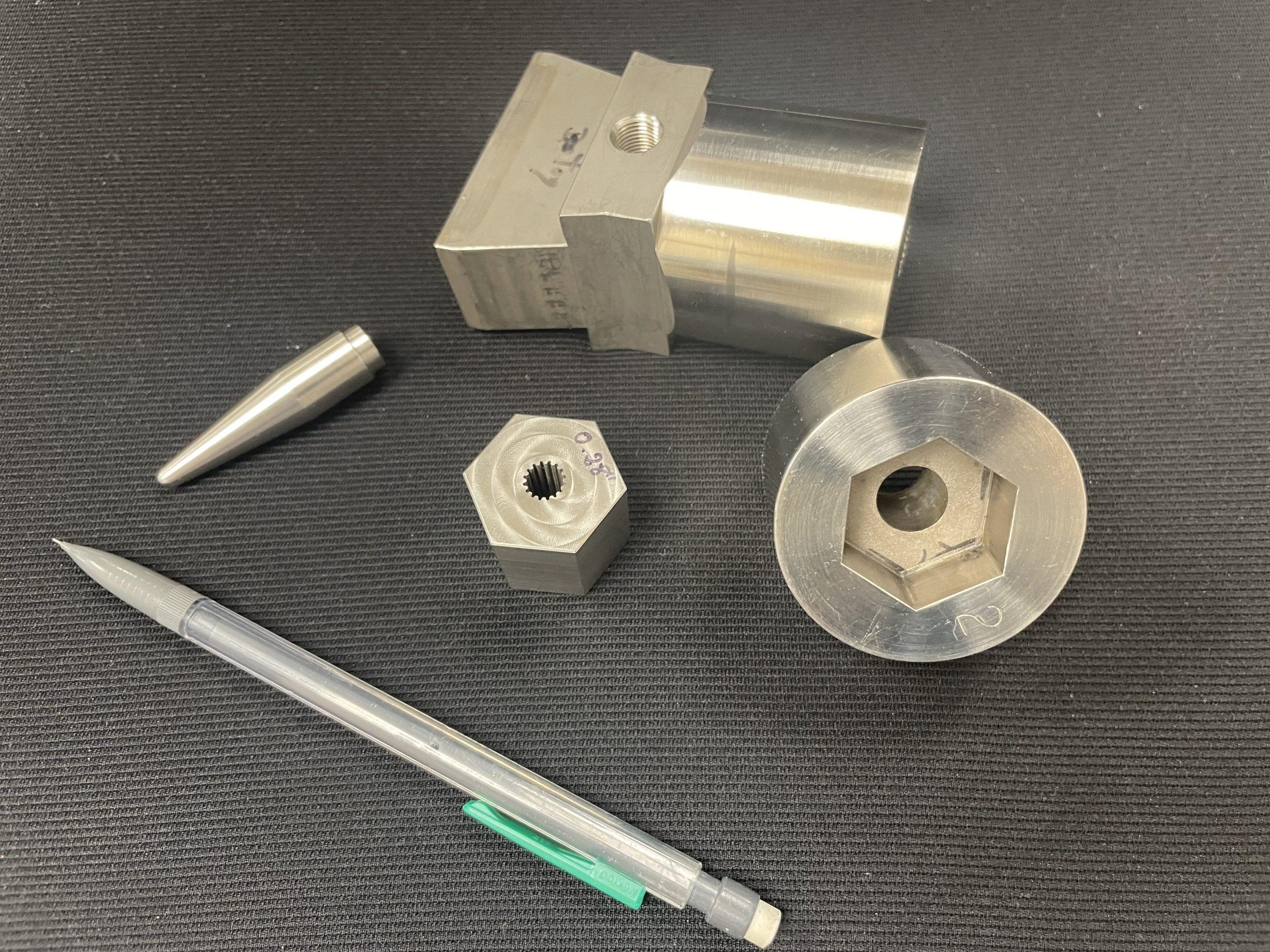
At Firstar, we go a step further. We use highly efficient Kanban inventory control and just-in-time fulfillment, so products arrive when you need them, not when a container clears customs. We had a customer whose existing supplier for a critical product extended their lead times up to 26 weeks (while also increasing the price per unit). We reduced their lead times by 80% through adapting our CNC machine with custom parts to perform the precision gear cutting the client needed. Instead of several months, our custom approach got them their product in just a few weeks.
2. Better Quality Control
When a lot fails inspection overseas, you add weeks to your timeline for re-inspection, rework, and replacement parts. The original cost savings go out the door. Closer to home, quality is managed where you can see it. A design question is a mere phone call away instead of a week of emails, and you can visit the shop floor to see your parts in production.
Our quality management system is certified to ISO 9001, and we review design for manufacturability before production begins, so tolerance stack-ups and risky features get addressed early instead of discovered at receiving inspection. Consistent quality protects customer satisfaction and brand reputation further down your supply chain.
3. Quicker Design Changes
When you’re working with complex parts, there are changes along the way. A revised tolerance, a material swap, or a new feature means a drawing update, and every update takes longer when your supplier is several time zones away.
Engineering hours spent chasing answers never show up on a quote, but they show up in your schedule. When your CNC supplier is in the same time zone, a revision gets reviewed, quoted, and machined without a week of waiting between each step.
4. Lower Shipping Costs
Freight, customs brokerage, and duties add up quickly. Domestic shipping reduces transportation costs and logistics costs, and reshoring means no tariffs on imported parts.
Nearshoring to Mexico or Canada shortens transit, but nearshored parts still cross a border, which means tariffs and potential compliance issues are back on the table.
Onshoring removes those variables and keeps your budget firm, which lowers costs over the life of a program.
5. Supply Chain Resilience
As you probably know all too well, a disrupted overseas supply chain is the new normal — port congestion, geopolitical events, and shifting trade policy mean critical parts are frequently held up. That stops an entire assembly line.
For OEMs, supply chain resilience is becoming a requirement. Working closer to home gives your team more control over schedules and inventory.
6. Better Fit for Low-Volume, High-Complexity Parts
Offshoring can make sense when you have a simple part with large volumes: You can spread setup, freight, and oversight across thousands of pieces. But when you have a low production volume, the fixed costs of overseas production land on a small number of pieces. An overseas supplier’s minimum order quantity can exceed your entire annual demand. You pay for years of inventory upfront and carry the risk of obsolescence if the design changes.
When tight tolerances, evolving designs, or specialty materials like superalloys and engineered plastic parts are in play, domestic manufacturers that specialize in low- to mid-volume work are the most efficient choice. Under a contract production model, you keep control of the design and a contract manufacturer builds it, with the people who machine your parts a phone call away.
7. Stronger IP Protection and Regulatory Compliance
For defense applications, reshoring often isn’t an option:
- The International Traffic in Arms Regulations (ITAR) controls defense articles and their technical data. Sending export-controlled drawings to a foreign supplier counts as an export and needs government authorization.
- The Defense Federal Acquisition Regulation Supplement (DFARS) requires specialty metals used in DoD projects to be melted or produced in the United Sates or another qualifying country.
- CMMC compliance is becoming an increasingly common mandate in DoD contracts. It requires contractors that handle CUI to safeguard the information through extensive, verified cybersecurity controls.
Regulatory compliance is simpler when you have a domestic supplier that already operates inside those requirements. Firstar holds a CMMC certification at Level 2, along with JCP approval and ITAR registration. You can review all of our manufacturing certifications and how we apply them on the shop floor.
The Potential Downsides of Reshoring
Reshoring isn’t the right move for every part, and we’d rather you hear the downsides from us than discover them mid-program.
The unit price is usually higher. Domestic labor and overhead cost more, and good logistics don’t change that. For simple, stable, high-volume parts, an overseas quote may still come out ahead, even after freight and duties.
Switching can temporarily double up your costs. Moving an existing part means assembling a complete data package, running first articles, and qualifying the new source. Most programs overlap the old and new suppliers for a while, so you may pay for both before the savings show up. Plan for that overlap up front and look for a machining partner with experience in dual-sourcing who can provide help you throughout the process.
Not every domestic shop fits your part. Some shops can’t hold your tolerances, machine your material, or take on your volume when you need it. Ask for evidence, such as inspection reports, certifications, and equipment lists, and get a clear answer on capacity before you commit.
You might not fully escape global exposure. A domestic supplier may still buy raw material or tooling from abroad. Reshoring shortens your supply chain, but it doesn’t remove every dependency. Ask where your material comes from.
For complex, tight-tolerance, low- to mid-volume work, we think the benefits outweigh these costs. Still, the smart move is to compare the total cost on your actual parts instead of reshoring by default.
Qualify Firstar for Your Program
Firstar is a full-service precision machining company in Brunswick, Ohio. We manufacture tight-tolerance components for the medical, defense, food processing, industrial assembly, and telecommunications industries. If your program needs a dependable partner in domestic production, we’d welcome the conversation.